|

February 2012
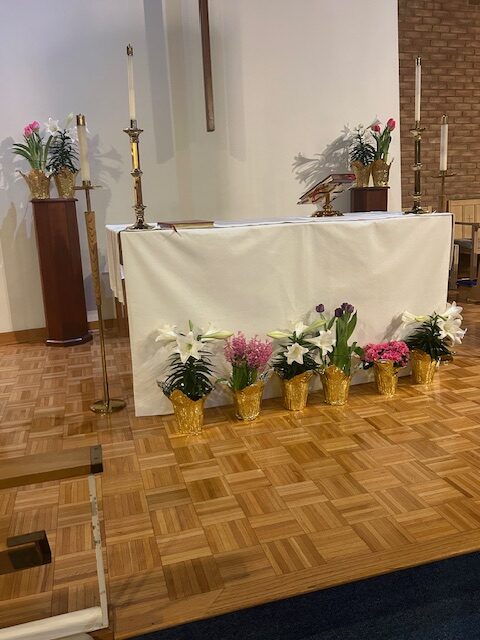
Folks who were raised in Christian traditions where the practice of an “altar call” as part of or following the sermon is regularly kept wonder, and sometimes ask, why we Episcopalians don’t keep the practice. The fact of the matter is that we do: “The gifts of God for the people of God.” This is the invitation to the gathered faithful whenever we celebrate the Holy Eucharist in The Episcopal Church to come forward and receive the Blessed Sacrament of bread and wine that is the body and blood of Christ Jesus our LORD. At times, particularly during Advent and Lent, we may add “Take them in remembrance that Christ died for you, and feed on him in your hearts by faith with thanksgiving.” This addition makes explicit the intention of the invitation, but is not necessary to validate it. “The gifts of God for the people of God” stands alone as both a statement of fact and as a call to action and commitment – an altar call. To come forward and receive is to accept God’s gift of “new and eternal life” in Christ; to eat, to ingest, is a union of our life and whole being with Christ, as our sharing of the one bread, one cup unites us to one another.
From the early beginnings of the church admittance to the Holy Eucharist was reserved only for the baptized. In those days baptism, confirmation by a bishop, and the first communion of the newly baptized were celebrated within one rite, usually at Eastertide, after a long period of time as a Catechumen learning of the faith. However, as the church expanded the rites of baptism and confirmation, along with the educational piece, grew apart. Some of you life-long Episcopalians may remember, as I do, that children were not able to receive communion “until such time as he be confirmed” and “as he can say the Catechism.” Today Baptism is recognized as a rite of full Christian initiation, and this “fencing of tables” has been removed. All the baptized, regardless of age or level of understanding are now welcome at God’s table. This does not diminish the importance of Christian formation and growth in the knowledge of the faith. The pendulum has, so to speak, swung away from seeking the perfection of human effort and understanding, toward a reliance on the mystery and perfection of God in Christ and the Holy Spirit present and actively working in the Sacrament.
The Wesley brothers, Charles and John, often expressed a sense of the Eucharist as a “converting ordinance,” and in their hymnody asked “Who shall say how bread and wine God into man conveys! How the bread His flesh imparts/ How the wine transmits His blood/ Fills His faithful people’s hearts with all the life of God!” But even then they “fenced the Table” to only those who were baptized members in good standing of the Methodist societies.
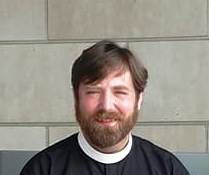
In my own understanding and call as a priest in God’s church, I stand fully in the conviction that the Holy Eucharist was, is, and always shall be the meal of and for the baptized. However, like the Wesleys, I believe in the mystery and power of God at work in the Sacrament, and am open to it as a “converting ordinance,” remembering that the table at which I stand and serve is indeed “God’s table, not ours, and all who are baptized, and who seek new life in Christ Jesus our Lord are invited to come and eat.”
On occasion you will hear me offer this as my own addendum to the invitation. In that moment I see myself as the servant in the parable of the great banquet: sent into the streets to speak for The Host, in His Name, and offering the hospitality of the Kingdom and a place at the Kings table to all who will accept it.
I offer this addendum particularly when an occasion like a funeral or wedding has brought people to us as visitors from other Christian traditions that may view the sacraments and participation in them differently from us – who may be dealing with their own internal “fences” or perceptions – who rightfully belong at God’s table, but have experienced being barred from other tables in the past simply because they aren’t known by a particular community – or God forbid it, are judged unworthy by that community (when we are all unworthy, yet made worthy in Jesus)-- who for one reason or another cannot otherwise hear or understand our Anglican “altar call” for what it is, or the simplicity, openness, and warmth with which it is always offered:
“The gifts of God for the people of God”-- whoever they may be.
Until next time, when we’ll gather again around The Master’s bench,
I bid you peace.
Fr. Alton +
*At the Master's Bench is the monthly column by M. Alton Plummer in The PACE, the newsletter of Grace Episcopal Church. Both the column and it's content are the property of the author, reprintable only by written permission.
With the new web page open we are in need of contributors to fill it with pictures and and content. If you are interested in becoming a web page author contact Greg Mackey @
This e-mail address is being protected from spambots. You need JavaScript enabled to view it
|