Joining Us

Daycare

Login Form


Welcome to the Grace Episcopal Church
Welcome to Grace Episcopal PDF Print E-mail

"Welcome to Grace!"


A wonderful greeting, and one that everyone of us wants to hear.  "Grace" is more than the name of our Church.


The Grace of God is the unmerited gift of love and forgiveness that we have been given in our Lord Jesus Christ.  God offers every human being this wonderful gift of Grace.  Regardless of who we are, where we come from, or what we've done God loves us and the gift of grace is ours -- free for the asking.


Here at Grace Episcopal Church we take the state of grace seriously.  We're not flashy like some churches. Our congregation is small, our worship fairly traditional according to The Book of Common Prayer, sharing the Holy Eucharist every Sunday.  If you're looking for flashy, God bless you in your search.  Its not us.


What we are -- or what we try to be over everything that we're not-- is a loving faith community that is open and accepting, prayerful and growing in our awareness of God's continual presence with us in the Holy Spirit, and our faith ("trust") as disciples of Jesus.


We invite you to join us in this joyful journey as together we "Experience Grace!"


Our regular worship times on Sunday Mornings are:


8AM -- quiet service of Holy Eucharist,

10 AM -- Choral High Mass with Holy Eucharist.


Adult Formation -- aka: "God, Coffee and Conversation" -- in Grace  Lounge at 9AM.


Youth Formation -- meets at 10 AM during the first part of the worship service. The kids then join us upstairs for Holy Communion.


"Welcome to Grace!"


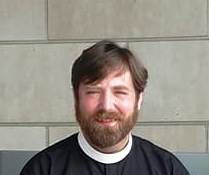
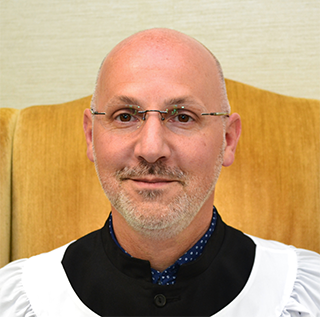
Fr. Alton Plummer, Rector


Grace News PDF Print E-mail


"God, Coffee and Conversation" -- our Adult forum that meets Sunday mornings at 9am -- will be engaging via DVD with Walter Brueggemann and his new six week study "Embracing the Prophets." Come! Take part in the conversation and grow your faith.


"At the Master's Bench" PDF Print E-mail


April 2012


“And they compelled a passerby, Simon of Cyrene, who was coming in from the country, the father of Alexander and Rufus, to carry his cross” (Mark 15:21).

A little over a year ago I was approached by Darleen and Denis Dryer, members of Body of Christ Church, with a vision: to open a House of Prayer in downtown Willoughby.  The vision was based on a similar project that has been up and running in Wilmington, Ohio for several years, and has been the inspiration for many other Houses of Prayer across the country.

The Willoughby Area House of Prayer (WAHOP) is an ecumenical ministry, with volunteers gathered from churches in the Willoughby – Willoughby Hills area.   The WAHOP is a ministry dedicated to intercessory prayer.  The vision is to eventually have a “storefront” on or just off Euclid Avenue that would be open 24 hours for people to visit and pray, or be prayed for and with.  Prayer needs for people and the community would be listed on a board so that intercessors can pray for those needs during their shifts at the ‘House’.

The question you may have is why this when we have churches?  “Church” as we have known it has changed, as well as its place and value within our culture. Say that it has “fallen out of fashion,” or that it has lost its respectability.  There are many reasons why we are where we are, and reams of paper have been spent in studies to pinpoint our issues, but we can’t.

A survey by sociologists in the mid 1990’s found that even though 40 percent of the people surveyed said they attended church, the reality was that only 20 percent actually attended any kind of worship service, regardless of denomination or faith.[1]  “Diane Butler Bass says that the first decade of the 21st Century has been the worst decade in the history of the church in the Americas; declines in attendance, declines in giving, declines in publishing; now more than 50% of the population claims no affiliation with any denomination or religion . . . the institutional church is on the outs, as far as we can tell.”[2]

Very early in my own ministry, perhaps with a little too much zeal and naiveté, I stunned a group of my UMC friends (including a bishop) by saying that our decline may be an act of God: That we had grown too big and sedentary for our own good and that God’s plan may be to push us back to the margins of society, the fertile soil where the church first took root and grew.  My opinion has not changed.

What we have found through the WAHOP ministry is, though church seems to be “on the outs,” people’s need for God and prayer has risen.  People may have lost faith with the institution, but their search for spiritual meaning and making a connection with God is growing.  The WAHOP of prayer is not an evangelism tool.  As an intercessory ministry we follow in the footsteps of St. Simon of Cyrene, the man who the Roman soldiers pulled from the crowd to carry the cross when Jesus fell under its weight.  As intercessors we are present in our faith to help people carry the burden they stumble under in prayer, as they make their way forward to a relationship with the God of Resurrection.

To date we, the Board of WAHOP, have not been able to secure an ideal permanent location due to cost and the desirability of the designated area for other businesses.  Unlike downtown Wilmington, Willoughby’s downtown with its restaurants and shops has become highly attractive as a “destination spot.”  Therefore we’ve adopted a “tent ministry” model -- remaining mobile, moving from church to church offering 12 hours prayer vigils, and actually using tents at festivals and events where people gather.  This summer the WAHOP will have a regular season spot at the Farmer’s Market.

The Willoughby Area House of Prayer is an officially established, not-for-prophet ministry funded only by “free will offerings.”  People wishing to become Intercessors must be screened by a board of laity and clergy, and attendance at training sessions is mandatory.  If you wish more information on this ministry, or wish to make a donation, please contact: WAHOP, 38740 Dodds Landing, Willioughby Hills, OH 44094.

Until next time, when we’ll again gather ‘round the Master’s Bench,

I bid you peace.

Fr. Alton +

[1] The Rev. Stephen Smith, Video Blog: Future Church Volume One,

http://www.youtube.com/watch?v=SCJZmylqnbA&feature=g-upl&context=G2029a8eAUAAAAAAAAAA

[2] IBID.


*At the Master's Bench is the monthly column by M. Alton Plummer in The PACE, the newsletter of Grace Episcopal Church. Both the column and it's content are the property of the author, reprintable only by written permission.


With the new web page open we are in need of contributors to fill it with pictures and and content.  If you are interested in becoming a web page author contact Greg Mackey @ This e-mail address is being protected from spambots. You need JavaScript enabled to view it

 
Easter Message 2012 PDF Print E-mail


The longest walk we ever take is the walk away from the grave -- feeling as if the world has come to an end –thinking about what used to be, and what might have been, after burying our dreams and hopes and all that was good about life – knowing it is over, done, finished, the end, and there is nothing you can do about it.  To walk away – back toward friends who cannot understand and to a world that hardly cares.  It is the longest walk and the saddest day, and sometimes the willingness to walk away is just not there.


Paul Laurence Dunbar was a gifted poet and publisher, born in Dayton, Ohio, in 1872, to parents who had escaped from slavery.
His parents instilled in him a love of learning and history.  By 1900 his reputation as a writer and publisher carried him to Washington, DC, where he worked for the Library of Congress.  1900 was also the year that he was diagnosed with tuberculosis.  He died from the disease in 1904. He was thirty-three years old.


When he died, his mother left his room exactly as it was on the day of his death.  On the desk of this brilliant man was his final poem, handwritten on a paper pad. After his mother’s death, friends discovered that because she had made his room into a shrine and not moved anything, the sun had bleached the ink in which the poem was written until it was invisible.  Paul Laurence Dunbar's last poem had been lost forever.


Sometimes, in the fight to hold on to a life that was, we lose much of life as it is now, and will be in the future.


Mary Magdalene came to the tomb “while it was still dark.”  She didn’t come with the any of the other women, or with spices to finish preparing Jesus’ body for burial.  She came alone for one purpose, to be as close as possible to a life that was – to sit in the shrine and touch the stone, as she fights to hold onto everything it kept contained.


When she discovers the stone removed and all that it kept contained gone, her grief is pushed to the breaking point – the strength of her “weeping” is such that she is completely unphased by the sight of “two angels in white, sitting where the body of Jesus had been lying, one at the head and the other at the feet,” who speak to her.  She believes that human beings are responsible for taking Jesus’ body. The presence of the angels is a sign for her that something greater has happened, but her ties to the past and her grief keep her from fully understanding and embracing what she is seeing.


How many of you have seen “Indiana Jones and the Raiders of the Lost Ark”?  What did the Ark look like? Specifically, do you remember what the lid of the Ark of the Covenant looked like? Spielberg’s designers took the look of the Ark in the movie straight from the description given in Scripture – Two winged creatures – Cherubim – angels – sitting on each end of the lid facing each other.  The space between them was called “the mercy seat” – the “footstool of God” – and the place where the High Priest of the Temple would offer the atoning sacrifice for the people’s sin by sprinkling it with the blood of the sacrifice.


The angel’s presence transforms the empty tomb into the ark of the New Covenant – the mercy seat of God through Christ’s offering of Himself on the cross, and the power of Resurrection.  It is no longer a cavern filled with death, but with the divine promise that there is no tragedy that God cannot redeem, no dream—even the elusive dream of peace on earth—that God, who raised Jesus from the dead, cannot energize and advance.


Mary Magdalene came to the tomb while it was still dark "but the darkness did not remain. The dawn broke. God's Son had risen.  And He appears and breaks through her grief by speaking her name – fulfilling something that was said by Jesus earlier in John’s Gospel – “I am the Good Shepherd who lays down his life for the sheep; my sheep know me, and recognize my voice.”


She calls Jesus, “Rabbouni! (“Beloved Teacher)” and he responds by saying “Do not hold on to me, because I have not yet ascended to the Father.”  For years this has been thought to mean, “Don’t touch me”– as if touching the risen Jesus violated some purity code.  But that doesn’t make sense, when you consider that Thomas and disciples in the Upper Room are invited to touch Jesus, and he hasn’t ascended to the Father by that point either.  I think that “Do not hold on to me” is a response to Mary’s “Rabbouni!” and her desire to “hold” onto the past, and to keep Jesus as her “beloved Teacher,” not letting Him rise to be fully God over her life.


A poem by Annie Johnson Flint, speaks to this Mary in all of us:
Some of us stay at the cross,
some of us wait at the tomb,
Quickened and raised with Christ
yet lingering still in the gloom.
Some of us 'bide at the Passover feast
with Pentecost all unknown,
The triumphs of grace in the heavenly place
that our Lord has made His own.
If the Christ who died had stopped at the cross,
His work had been incomplete.
If the Christ who was buried had stayed in the tomb,
He had only known defeat,
But the way of the cross never stops at the cross
and the way of the tomb leads on
To victorious grace in the heavenly place
where the risen Lord has gone.


Author and playwright, Victor Hugo once put it like this, "For half a century I have been writing my thoughts in prose and verse and history and philosophy . . . But I feel I have not said the thousandth part of what is in me.   When I go down to the grave I can say, I have finished my day's work,' but I cannot say, I have finished my life.'  My day's work will begin again the next morning. The tomb is not a blind alley; it is a thoroughfare.  It closes on the twilight; it opens on the dawn."


Easter is more than the celebration on a particular day, and of  peculiar event. Easter is a way of being.  We are invited by God to “resurrection living” -- moving beyond our losses and our fears – not gripping so tightly our family concerns -- our problems at work -- the anxiety over our health and our future, or even the loss of someone we love – to trust that God is fashioning a way out, even where we see no way out – and from that place, celebrate the promise that a new world is unfolding.


Dr. Martin Luther King, Jr., used to tell the story of Sister Pollard, a seventy-year-old African American woman who lived in Montgomery, Alabama during the now famous bus boycott.  One day, after walking significant distances daily for several months, Sister Pollard was asked if she wanted a ride.   When she answered, “No,” the person responded, “But aren’t you tired?”  To which Sister Pollard answered, “My feets is tired, but my soul is rested.”


A “rested” soul is the sign, and the gift, of resurrected living.”
We will continue to face all kinds of challenges and struggles along the way; our feet will be tired, but our spirits will be strengthened through the presence of the risen Christ. This is the good news we celebrate this Easter morning


Fr.  Alton Plummer's Sermon for Easter Sunday, 2012


Broken Circle PDF Print E-mail


All women of the church are welcome to join us at any time. Please let Dorothy Ferguson know whether or not you will be attending---942-2256. Anyone needing a ride may also call Dorothy.


Grace Episcopal Church


Grace Image Gallery

  • Candlemas 2
  • Candlemas 1
  • Candlemas 7
  • Candlemas 4

Who's Online

We have 2 guests online

Adult Education

Featured Links: